
Personalized brain stimulation therapy for depression
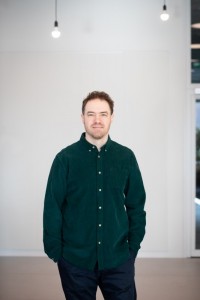
Depression is the leading cause of mental health disability worldwide. Aalto University postdoctoral researcher and Instrufoundation Fellow grant recipient Juha Gogulski is developing individualized brain stimulation treatments for patients with depression.
Juha Gogulski’s research focuses on repetitive transcranial magnetic stimulation (rTMS). In this treatment, a rapidly changing magnetic field induces electrical currents in the brain, activating neurons and helping them to re-wire. The idea is that in depression, the activity of certain brain circuits is reduced, and stimulation may help normalize this activity.
The use of rTMS has become more common in Finland since the early 2000s, and it is being provided, for example, at university hospitals.
– rTMS is typically applied in a one-size-fits-all manner. In theory, there is almost an unlimited number of parameter combinations, but we are not yet able to determine which ones work the best for each individual, Gogulski explains.
His research aims to address this challenge. The project combines TMS with electroencephalography (EEG). Together, these methods are used to identify a biomarker - essentially a “fingerprint” of brain activity - that could predict which type of treatment would work best for a specific patient.
If such a biomarker can be developed, depression treatment could in the future be tailored based on measured brain activity, rather than relying on trial-and-error between different treatment options.
A rare research environment
The research is conducted at the Department of Neuroscience and Biomedical Engineering at Aalto University, where an exceptional research setup is available: a system of five overlapping TMS coils. Only four such systems exist worldwide. This setup allows stimulation to be precisely targeted to different brain regions without physically moving the coils. The stimulation target and other parameters can be adjusted electronically while simultaneously measuring the brain’s electrical responses.
The study also utilizes Aalto’s MRI resources, advanced analysis methods, and a high-performance computing cluster.
– We are analyzing a clinical dataset of depression patients who have undergone TMS–EEG measurements across multiple brain regions. The dataset is unique, partly because highly precise methods have been used to ensure signal quality. Based on this data, we are building and validating a biomarker that could help select the optimal rTMS treatment pathway for each patient in the future, says Gogulski.
If successful, the impact could be significant for both patients and the healthcare system.
– In that case, depression treatment would no longer rely on a ‘try and see’ approach. Treatment could be adjusted based on measured brain activity already during the treatment course, potentially improving outcomes and shortening treatment courses, he adds.
From physics to neuroscience
Gogulski’s research path has crossed disciplinary boundaries. He began his studies in physics at University of Helsinki, but later sought work more closely connected to people and medicine. Medical studies quickly led him into neuroscience.
– I became interested in what is really happening in the brain. TMS was particularly fascinating because it allows us not only to measure but also to influence brain function.
Juha Gogulski earned his Doctor of Medicine degree in 2018 and continued with both research and clinical work as a physician. A pivotal stage in his career was a postdoctoral period at Stanford University in the United States, where he deepened his expertise in TMS research.
– I have worked both in clinical settings treating patients and in developing research methods. That combination provides a strong foundation for developing new treatments.
Funding enables independent research direction
The Instrufoundation Fellow grant is significant for Gogulski both personally and scientifically. At an early career stage, funding often determines what research topics one can pursue and whose projects one can join. The fellowship allows him to build his own line of research.
– It helps me find my place in the academic world. With independent funding, I can focus on the questions I consider scientifically the most important. This type of research is not a one-person effort either. It requires a team where everyone brings their own expertise.”
With the support of the grant, Gogulski can dedicate more time to research and build a research team. The funding will enable, among other things, the hiring of a doctoral researcher and the coverage of measurement costs.
A long road toward new treatments
Gogulski’s goal is to better harness the potential of brain stimulation technologies in patient care. However, research is slow and requires extensive foundational work.
– Real breakthroughs often arise from long-term basic research. First, we need to understand deeply how the brain responds to stimulation and which signals predict treatment response.
– That is why grants play a crucial role in research. They enable the groundwork upon which new treatment methods can later be built.
Text: Tia Härkönen
Photo: Aalto University / Matti Ahlgren